Posts in "Articles"

Uyghur Poetry & Cultural Erasure

Aziz Isa Elkun presents on Uyghur Poetry & Cultural Erasure – London Book Fair 2024
On the final day of the London Book Fair 2024, I had the privilege of participating in two enlightening events as a speaker.

The first event, “A Trinity of Freedoms at Risk: Expression, Publishing, and Reading,” held on the main stage of the London Book Fair 2024, provided a platform for insightful discussions organized in partnership with IPA, English PEN, PEN International, IFLA, EIBF, and IAF. I express my gratitude to the panelists whose deep expertise enriched our dialogue, and a special thanks to Claire Armitstead from the Guardian #theguardian for her role as Chairperson.

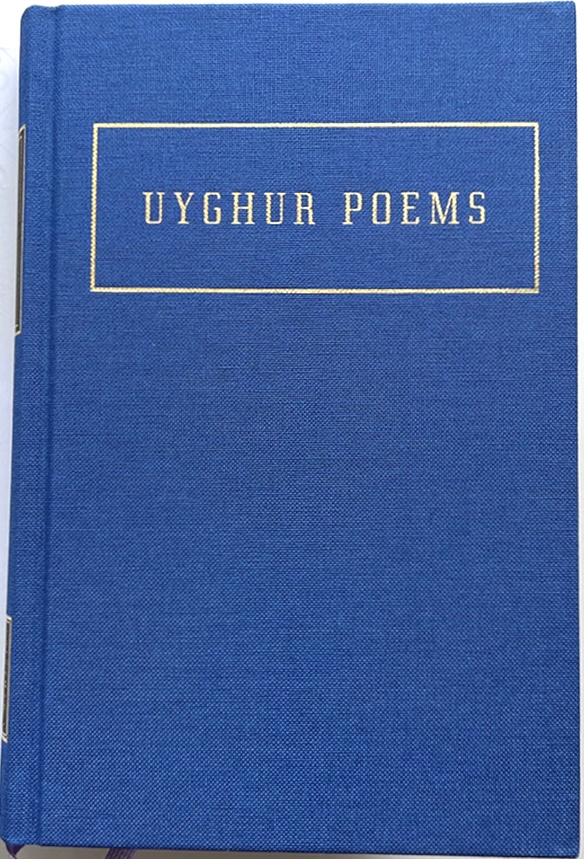
The second event, organized by English PEN and attended alongside Dr. Ross Holder, Head of the Asia/Pacific Region at PEN International, focused on “Uyghur Poetry and Cultural Erasure in the #Uyghur Homeland.” Together with Ross, we delved into the themes of my edited and translated anthology book “Uyghur Poems,” published by Everyman’s Library  Library under the Penguin imprint in November 2023.

Our conversation not only celebrated the rich tradition of #Uyghur poetry but also shed light on the atrocities faced by Uyghurs under the Chinese government’s repressive policies. I extend my appreciation to Ross Holder for his contributions contributions to the event and I am grateful to the English PEN for their invaluable support in organizing this event.

Read More

Uyghur Poetry: A Testament to Love, Survival, and Defiance Against Persecution

Aziz Isa Elkun, Poet & Writer
Researcher at SOAS, University of London

Published by Brussels Morning Newspaper 26 June 2024 11:27 Am

The Uyghurs love writing and reading poems; it is an essential part of Uyghur cultural expression and plays a vital role in the continuation of creativity and development of the Uyghur language, literature, and culture.
 
Since 2016, over three million Uyghurs and other Turkic people in the Uyghur homeland in China have been collectively persecuted and sent to the notorious Chinese internment camps in the Uyghur Region. Soon after the establishment of the People’s Republic of China in 1949, with the political and military support of the Soviet Union, the so-called Chinese Liberation Army illegally occupied the Uyghur homeland of East Turkistan, also known as Uyghuristan. In 1955, it announced the founding of the “Xinjiang Uyghur Autonomous Region.” As a Uyghur living in exile, and a poet and advocator for freedom of speech and writing, my conscience forbids me from calling our Uyghur homeland, “Xinjiang”, which means “New Territories” in the Chinese language. In spite of ongoing persecution under Chinese rule, Uyghur writers sustained their rich cultural legacy, and Uyghur poetry played a significant role in keeping Uyghur language and literature alive, and expressing criticism of the oppressive Chinese regime.

Read More

A Poem For My Father Who Stayed In His Grave Only 623 Days

Aziz Isa Elkun
Research affiliate, SOAS, University of London

The Chinese government said this was done in order to modernize us, but their true aim was to destroy Uyghur ethnic, cultural and religious identities. I felt as if my father’s body had been brutally torn out of its resting place in our ancestors’ land.

Over the past century, countries have used the tool of nationalism to pursue their own interests. Nationalism is about people, land and the relationship between them. Nationalist propaganda creates a special relationship between a unique people and a particular territory.

The Uyghurs are one of the many peoples who have been left out of this tidy calculation. We are labelled as an “ethnic minority” that suits Chinese version of statehood. China’s policies aim to cut our ties to our land. Uyghur pilgrims are cut off from their places of worship; villages are uprooted from their fields, and families are torn apart. Islam and Uyghur culture are none separated identities of the Uyghurs, therefor they regard the burial place – gravy yard as a holy place that connects the sprits of the generation past and today. Plus, Uyghur graveyard is a symbol of belonging to each other in the Uyghur community that keep connects Uyghurs spiritually, culturally and politically.

Read More